

Quick Summary
Full-grain leather is the best grade for everyday leather goods because its top layer is left intact, giving it the density and strength to handle daily carry, spills and office knocks. Lower grades like genuine, split and bonded leather rely more on coatings that can peel or crack over time. Check the grade and finish before you buy.
- Full-grain leather keeps the hide's top layer intact, so its fibres stay dense and tough.
- Genuine leather usually means lower layers of the hide, not the top grain, and is often coated.
- Bonded leather is made from scraps and adhesives and can peel, flake and split within months.
- Top-grain leather is lightly sanded, looks more uniform, and costs less than full-grain.
- Ask sellers to name the grade and finish, since a vague "genuine leather" label is a warning sign.
Table of Contents
- Why Leather Grade Matters More Than the Word Leather
- Full Grain Leather for Daily Carry and Heavy Use
- Top Grain Leather as a Practical Everyday Alternative
- Leather Durability, Realistic Lifespan and Wear Over Time
- Grade Versus Finish: What to Check Before You Buy
- Choosing Your Everyday Leather Piece at Forge-Hollow
- Frequently Asked Questions
Last Updated: November 6, 2026
Full-grain leather is the grade to choose for everyday leather goods, but the reason matters more than the label. A briefcase or wallet that handles daily carry, spills and office knocks needs its strength in the top layer of the hide, not just a leather-looking surface.
Many shoppers assume anything labelled "leather" will last. It often will not. Grades differ in how much of the hide's natural grain survives, which decides how well the piece resists wear.
Why Leather Grade Matters More Than the Word Leather
The word "leather" only tells you the material came from an animal hide. The grade tells you what happened to that hide, and that determines how it will age.
A useful way to think about it:
- Top layer matters most. The outer surface takes the most abuse from rubbing, weather and handling.
- Natural grain is strength. Intact grain means fibres are dense and tough.
- Sanding removes strength. Corrected or sanded surfaces can look uniform but lose that density.
When you compare two bags that both say "leather," the grade is the real difference in price, feel and longevity.
What Leather Grades Actually Mean
Leather grades describe how much of the hide's outer layer remains intact. From strongest to weakest, the common grades are:
- Full-grain leather: The top layer is left intact, with natural markings and fibre density.
- Top-grain leather: The surface is lightly sanded to remove blemishes, then finished.
- Genuine leather: A lower-grade layer from the hide, often coated to look smoother.
Each step down costs less and looks more uniform, but gives up durability.
Genuine Leather and Split Leather Explained
"Genuine leather" sounds premium but usually means the lower layers of the hide, not the top grain.
Split leather is the layer left after the top is separated off, often sanded, embossed and coated to imitate grain.
Watch out: If a product lists only "genuine leather" and no grade, assume it is not full-grain. Ask the seller directly which layer was used.
Full Grain Leather for Daily Carry and Heavy Use
For daily carry, full-grain leather is the strongest choice. Its natural surface resists scuffs and has the density to handle years of use.
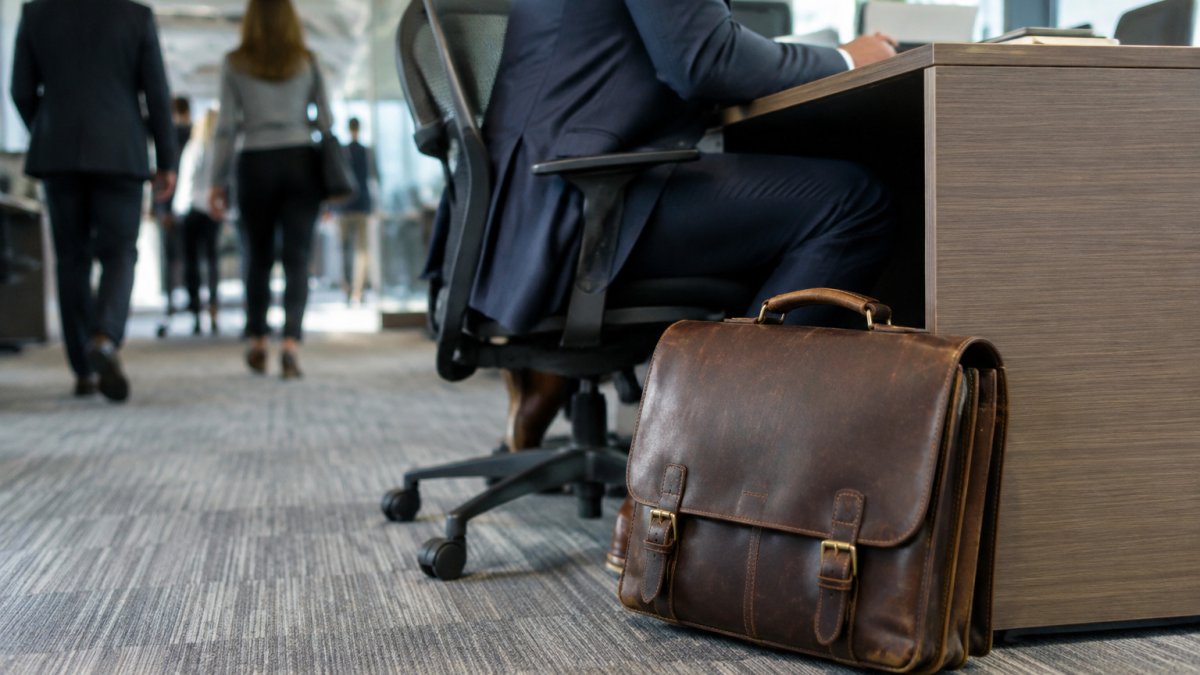
Full-grain works well for:
- Briefcases that get thrown in car trunks and onto office floors
- Wallets that go in and out of pockets all day
- Belts that bend, tighten and take daily stress
Full-Grain Characteristics, Natural Markings and Patina
Full-grain hides show their history. Small scars, insect marks and grain variations are left in place rather than sanded away. Some buyers find these marks appealing.
Over time, full-grain leather develops patina. Oils from your hands and daylight deepen the colour and soften the surface, reading as richness rather than damage.
Many shoppers ask whether patina will make a work bag look worn.
Top Grain Leather as a Practical Everyday Alternative
Top-grain leather is a middle option: lightly sanded to remove scars and marks, then finished with a colour layer. It looks more uniform than full-grain and costs less.
It can be a sensible choice if you want:
- A cleaner, more consistent look for client-facing work
- Lower cost than full-grain
- Decent durability for moderate daily use
The trade-off is that sanding removes some of the tightest fibres, and the finish carries more of the wear. Top-grain shows scuffs sooner than full-grain once the finish wears through, so for heavy abuse, full-grain usually lasts longer.
Where Bonded Leather Falls Short
Bonded leather is made from leather scraps mixed with adhesives and a plastic coating. It is the cheapest and least durable option, often peeling, flaking and splitting after a few months of regular use, especially at folds and edges.
For everyday use, bonded leather is rarely worth the saving. It can look fine on a shelf but struggles with the rubbing and flexing daily carry demands.
Leather Durability, Realistic Lifespan and Wear Over Time
How long a leather piece lasts is not decided by the grade label alone. Hide quality and thickness, construction, finish, and use frequency all interact.
A useful way to separate the factors:
- Hide quality and thickness. Full-grain hides retain the dense outer fibre layer, which resists abrasion and flex fatigue. Lower layers and split leather lack that density, so they depend more on coatings.
- Construction. Stitching, edge finishing, lining, and reinforcement at stress points such as handles, straps, and corners often determine failure before the leather itself does. A full-grain bag with poor stitching can fail sooner than a well-built top-grain piece.
- Finish. Aniline and semi-aniline finishes show wear as patina and can be conditioned. Protected or corrected finishes resist spills but can crack or peel once the coating is breached.
Realistic, qualified lifespan ranges by grade and use:
- Full-grain, well constructed, moderate daily use: Many practitioners find full-grain pieces can serve for a decade or more with periodic conditioning, though heavy daily abuse and neglect shorten that. Surface scuffs and darkening are normal and usually cosmetic.
- Top-grain, moderate daily use: A common pattern is several years of good service, with the finish showing wear before the leather structure fails. Once the finish wears through at corners or folds, scuffs become more visible.
- Genuine and split leather: Coatings tend to crack or peel within a few years of regular flexing, especially at edges and folds. Lifespan depends heavily on coating quality rather than hide quality.
For households with pets, children, spills or heavy handling, full-grain with a protected or semi-aniline finish balances durability with easier care.
Watch out: A grade label alone cannot guarantee lifespan. Learn why cheap leather peels and cracks to see what really causes early failure.
Grade Versus Finish: What to Check Before You Buy
Grade and finish are different attributes, and conflating them is a common shopping mistake. Grade describes which layer of the hide is used and how much natural grain remains.
The main finish types and what they mean for everyday wear:
- Aniline: Transparent dye with little or no pigment. It shows natural markings and develops patina, but it stains and scratches more easily. Better for buyers who accept maintenance and want maximum natural character.
- Semi-aniline: Light pigment plus a thin protective layer. It balances natural look with moderate stain resistance, a common choice for everyday bags and furniture.
- Protected or pigmented: A pigment layer and top coating. It resists spills and is easier to wipe clean, but the coating can crack or peel at flex points over time, and it hides natural grain.
How to verify what you are buying:
- Ask for the grade by name. Full-grain, top-grain, genuine, or bonded. A seller who cannot name the grade is a warning sign.
- Ask for the finish type. Aniline, semi-aniline, protected, or corrected. The answer tells you how the piece will age and how much care it needs.
- Inspect the surface. Full-grain shows natural texture and small variations. A perfectly uniform, glossy surface often means heavy correction or coating.
A clear answer about both grade and finish is more useful than any single label, because it tells you how the piece will look after a year of daily use and what care it will need.
The article lays out the main finish types and what each means for everyday wear.
| Finish | What it is | Everyday wear |
|---|---|---|
| Aniline | Transparent dye with little or no pigment | Shows natural markings and patina, but stains and scratches more easily |
| Semi-aniline | Light pigment plus a thin protective layer | Balances natural look with moderate stain resistance |
| Protected or pigmented | Pigment layer and top coating | Resists spills, but the coating can crack or peel at flex points |
| Corrected grain | Sanded and embossed surface with heavy finish | Looks uniform but gives up the strength of intact grain |
Choosing Your Everyday Leather Piece at Forge-Hollow
If you want a piece for daily office life, the full-grain grade is the strongest match. Forge-Hollow builds its briefcases, wallets and belts from full-grain hides, so the strength sits in the top layer rather than a coated surface.
Here is how to choose:
- Daily briefcase: Look for full-grain with solid stitching and a padded laptop sleeve. Our Premium Leather Briefcase is built for this use.
- Everyday belt: Full-grain holds its shape and handles daily tightening. Browse our Premium Leather Belt range.
- Pocket wallet: A full-grain wallet is a lower-cost way to start. See our Premium Leather Wallet.
Our customers often mention how the leather feels from the first use and how the patina develops over time. Results vary by care and use, so check the grade and finish before you decide.
Frequently Asked Questions
Is full-grain leather good for everyday use?
Yes. Full-grain leather keeps the strongest fibres of the hide because the outer surface is not sanded down. That density is why it resists abrasion and tears better than corrected or bonded alternatives, and why it tends to hold up to daily carry, office commutes and frequent handling. It does show scuffs and develops patina over time, so it suits people who accept natural wear. Forge-Hollow builds its briefcases, wallets and belts from full-grain hides for this reason, and current prices are listed on the Forge-Hollow website.
Is top-grain leather more practical than full-grain for daily use?
It can be. Top-grain leather has had its surface sanded and refinished, which removes some natural markings and gives a more uniform colour and smoother feel. That makes it easier to keep looking tidy and slightly more resistant to stains, though it is usually a little less durable than full-grain. For someone who wants a consistent appearance with moderate use, top-grain is a sensible middle option. For heavy daily stress, full-grain generally wears better.
How can you tell whether leather is durable enough for everyday use?
Check the grade label first: full-grain or top-grain indicates the top layer of the hide is intact. Look at edge finishing, stitching density and hardware, and ask whether the seller states the grade explicitly. Be cautious with vague terms such as genuine leather, which can describe a lower layer of the hide. Ask about the tannery origin and whether the product is coated or laminated. Brands that name the grade and finishing method are easier to verify than those that do not.
Does full-grain leather get better with age?
It develops a patina, a darker, softer surface that forms as oils from handling and light exposure accumulate. Many owners find this improves the look of the piece, but the change depends on conditioning, sun exposure and how often the item is used. Regular light conditioning helps keep the leather supple and prevents cracking, so patina is best thought of as gradual character rather than a guaranteed improvement.
